
Federal BOP Release Destinations
The Federal Bureau of Prisons is a national prison system, not a Douglas County detention facility. A person arrested locally may first appear in the Douglas County Jail record, then move under U.S. Marshals Service authority or into a designated federal institution. Once federal custody controls, the county portal is no longer the right release-date source.
A BOP release can lead to the community, residential reentry placement, supervised release, another custodian, or a detainer-based transfer. The locator’s statement that a person is no longer in BOP custody does not guarantee that all government custody ended. Federal supervised release is a court-ordered period in the community and is different from confinement. Another agency’s hold can also change the destination.
Confirm a Federal BOP Release
The official BOP inmate locator is the central public search for federal prisoners. It covers federal inmates incarcerated from 1982 to the present. Use an identifying number when one is available because names and ages can overlap.
- Open the official BOP locator and choose a number search or name search.
- Enter the BOP register number, DCDC number, FBI number, or INS number when known.
- For a name search, enter the full name and narrow the result with age, race, or sex only as the interface provides.
- Match the correct record and note the register number, facility listing, and release date.
- If the date is past and no location is shown, read the BOP record explanation before treating the person as released.
- Use the sentencing federal court or BOP records route when the result is missing, conflicts with another source, or needs formal proof.
The main Douglas County release search helps identify whether the last record is county, state, federal, or immigration based. Do not search GDC for a federal sentence merely because the original case involved someone living in Douglas County.
Federal BOP Locator Fields
The locator is a concise custody and release tool. It does not reproduce the full federal judgment, sentence computation, movement history, or supervision file.
| Field | What it establishes |
|---|---|
| Register number | Provides the strongest public identifier for the federal record. |
| Name | Connects the record to the person, subject to careful matching. |
| Age and demographic fields | Help separate people with similar names. |
| Release date | Shows the date reported by BOP, which may be projected or completed depending on context. |
| Location | Names a current BOP facility when one is shown. |
| Released status context | A past date with no facility can indicate the person is no longer in BOP custody. |
BOP cautions that sentence computations can be reviewed and recalculated, including after federal time-credit changes. Save the date of the lookup. A current screen is useful for navigation, while a formal record request or court document is stronger when an exact sentence history must be established.
Reading Federal Release Records
The BOP record explanation describes how to interpret a past release date when no facility appears.
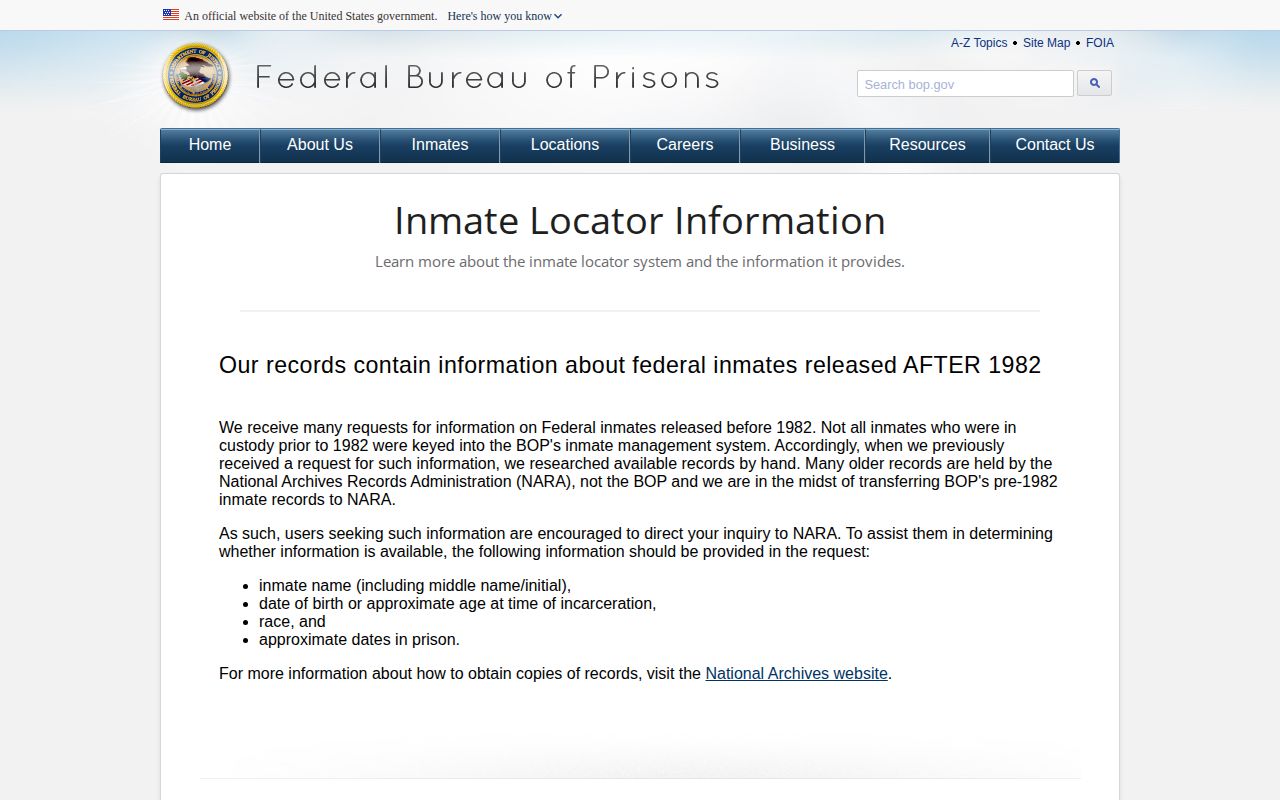
If the listed release date has passed and the record does not show a facility, BOP says release occurred on that date and the person is no longer in BOP custody. The person may still be under supervised release, parole in an older federal case, or another justice-system hold. The federal sentencing docket and probation office are the better sources for supervision terms.
Federal Custody Versus Douglas Jail
A Douglas County arrest record can document only the local part of a federal path. The sheriff’s release entry may say transfer to a federal agency or another facility. That transfer ends county jail custody without returning the person to the community. The Douglas County live portal may then stop displaying the person, even though federal detention continues.
Ask the Sheriff’s Records Division for the booking-and-release record, release reason, and receiving agency. Requests go to records@sheriff.douglas.ga.us or 770-942-2121. A Proof of Incarceration can confirm the county custody dates. Once the record identifies a federal transfer, follow BOP, federal court, or USMS channels instead of repeating the local portal search.
| Last known event | Correct next source |
|---|---|
| Local bond or county release | Douglas County sheriff record and court docket |
| Transfer to USMS | Federal court record and agency contact; BOP after designation |
| Federal prison sentence | BOP inmate locator |
| Georgia prison sentence | GDC offender search, not BOP |
| Immigration detainer transfer | ICE Online Detainee Locator |
Douglas Federal Transport Path
The Douglas County Sheriff’s Transports Division moves inmates to and from medical sites and detention or correctional facilities across the county, state, and country. In 2018 the division reported 3,226 transports, including 82 out-of-state extraditions, across 237,727 miles. Those figures show why disappearance from a local roster cannot be equated with freedom.
A federal movement may involve temporary jail holding, a USMS transfer, a federal detention center, and later designation to a BOP prison. Public USMS lookup options are more limited than BOP’s locator. The federal court docket may show detention, commitment, sentencing, or release orders, while the BOP record becomes most useful after a federal prison designation.
Federal BOP Records and Contacts
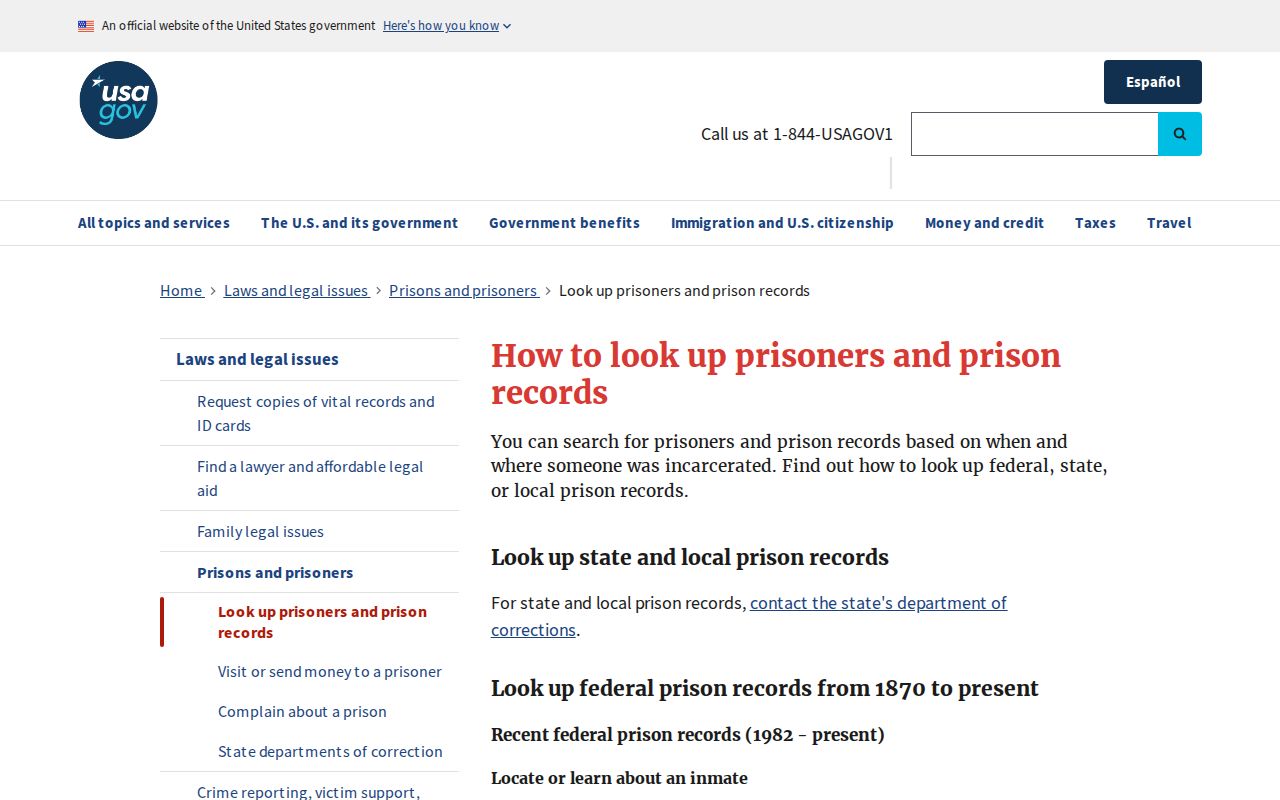
BOP’s locator is national and does not supply a Douglas County records counter. Formal federal records belong to the federal agency or court that created them. Use the register number, full name, date of birth, sentencing court, and approximate custody dates in a focused request. The USA.gov prisoner-records guide provides an official overview of federal and state record paths.
For local federal supervision context, Douglas County’s important-phone-numbers page lists the Federal Probation Office for the Northern District of Georgia at 770-980-0369. That office is not a general BOP release-record desk. It may be relevant only when the federal judgment places the released person under that district’s supervision.
Federal Release Date Changes
A locator date can change because BOP recalculates the sentence, applies updated credit, receives an amended judgment, or corrects prior custody credit. A detainer can change where the person goes even when the federal term ends. Court orders and statutory federal credits must be applied by the responsible federal office, not estimated from the sentence length shown elsewhere.
- Projected release
- A future date based on the current federal sentence computation.
- Supervised release
- Court-ordered community supervision after incarceration.
- Detainer
- Another authority’s request affecting custody or transfer at release.
- Designation
- BOP assignment to a federal institution after commitment.
- USMS custody
- Federal custody often connected to court proceedings and transport before BOP designation.
When the locator conflicts with a federal docket or a recent agency notice, confirm through BOP or counsel in the case. The latest official computation controls, while a saved locator result documents only what the public system showed at that time.
Federal Release Verification Limits
BOP does not cover county-only detention, Georgia prison custody, or ICE civil detention. It also may not resolve a person held only under USMS authority before BOP designation. A missing result can reflect spelling, an old record outside the covered period, a different identifier, or a custody system that BOP does not own.
Final verification should answer three points: whether BOP custody ended, when it ended, and whether another agency took custody. The BOP locator can answer the first two in many records. The sentencing court, federal probation, a receiving agency, or the Douglas County transfer entry may be needed for the third.